How to Choose Door Handles: A Guide for Renovators (2026)
Everything you need to choose the right door handles for your home – from handle types and finishes to functions, brands, and budget.

We've helped thousands of Australian homeowners choose door handles and door hardware for new builds and renovations. In this guide, we'll walk you through the key decisions and steps to choose the right door handles, from how many you actually need, to the best door handle brands, types, finishes and more.
Step 1: The Different Types of Door Handles
There are countles types of door handles, with each handle having a different look, feel and function. Here are the most common choices:
Lever Handles

Door Knobs

Pull Handles

Flush Pulls and Half-Moon Pulls

Lever Handles

Lever handles are the most common choice for internal doors in Australian homes. You push down on the lever to release the latch, which makes them comfortable to use and easy to carry through a whole home in one consistent style.
We recommend lever handles for most bedrooms, bathrooms, living areas, laundries and home offices. They come in the widest range of shapes and finishes, and most ranges offer matching passage, privacy, dummy and entrance options. That makes it much easier to keep the same look on every door while choosing the right function for each room.
Best for: Most internal doors, including bedrooms, bathrooms, living areas and home offices.
Door Knobs

Door knobs have a classic grip-and-twist action. They work especially well in heritage homes, Hamptons-style renovations and spaces where you want the hardware to feel more decorative or traditional.
Before changing from a lever to a knob, check the existing holes in the door. The new rose or backplate needs to cover the old door preparation, and a knob should be comfortable for everyone who uses the door. We often recommend knobs for formal rooms, guest rooms or character homes, while using levers in the busy everyday spaces.
Best for: Heritage homes, Hamptons-style builds and more formal spaces.
Pull Handles

Door pull handles are designed to be pulled rather than pushed down like a lever. They are a good option for feature entry doors and some sliding doors where you want the hardware to make more of a statement.
For hinged entry doors, a pull handle is usually paired with separate compatible locking hardware, such as a deadbolt, so check the full setup rather than choosing the pull on its own. For cavity sliders and other sliding doors, the key thing is choosing a profile that will not stop the door from moving properly.
Best for: Feature entry doors, sliding doors and doors where you want a larger visual statement.
Flush Pulls and Half-Moon Pulls

For cavity sliders, wardrobe doors and other sliding doors, a projecting lever is not always the right fit. Flush pull handles sit flatter against the door, while half-moon door handles give you a little more grip without adding a bulky profile.
We recommend deciding how the door moves before choosing the handle. It is much easier to get the hardware right at the planning stage than to discover a handle prevents a cavity slider from closing properly.
Step 2: Choose the Right Handle Function
The function is just as important as the style. A handle may look identical from the outside, but passage, privacy, dummy and entrance sets all do different jobs. We recommend listing every door in the home before you order, then assigning the right function to each one.
Passage Handles

Passage door handles have a latch, but no lock. They are used where the door needs to open and close normally without needing privacy—such as hallways, living rooms, laundries, walk-in robes and connecting doors between rooms.
This is usually the most common handle type in a home. If you are renovating a whole house, the majority of your internal doors will often use passage sets.
Privacy Handles

Privacy door handles and sets have a lock that can be engaged from inside the room, generally using a turn snib or push-button. They are the right choice for bathrooms, ensuites, toilets and bedrooms where a temporary lock is needed.
We recommend keeping the same handle profile and colour as your passage doors where possible, then choosing the privacy version for the rooms that need it. This is how you get a consistent result without accidentally putting locking hardware on every door.
Entrance Handles

Entrance handles are used on doors that need security, including front doors, back doors and doors leading from a garage into the home. They are generally lockable from both sides and may be paired with a separate deadbolt.
We see customers focus on the look of the entrance handle first, which is understandable, but the lock, door thickness, backset and existing door preparation all need to work together. Check the product specification before ordering, particularly if you are replacing older hardware.
Dummy Handles

Dummy door handles are fixed handles with no moving latch or lock. They are used on the fixed side of French doors, wardrobes, linen cupboards and decorative doors where you need the look of a handle but not the mechanism.
If one side of a double door opens and the other stays fixed, you will generally need one working handle and one matching dummy handle. This is one of the most common things people miss when they are counting hardware for a renovation.
Deadbolts

Deadbolts add another locking point to an external door. They are commonly used with entrance hardware on front, back and side entries.
We recommend choosing the entrance handle and locking setup together. That way, you can check the finish, function, door thickness and compatibility before anything is installed.
Smart Door Locks

Smart door locks are an option for people who want keyless entry through a code, app, fingerprint or key card, depending on the model. They can be particularly useful for busy households, new builds and properties where temporary access is helpful.
If you are considering a smart lock, check the door thickness, handing, lock compatibility and power requirements before ordering. Yale is a good place to start when you are comparing smart-entry options.
Not sure which function you need? Read our practical guide to passage, privacy and dummy door handles.
Step 3: Pick Your Finish
One of the questions we hear most often is, “Do all my handles need to match?” The short answer is no, but they should feel like they belong in the same home.
You don’t need to use one finish everywhere. What matters is that there is a clear plan. Some customers use one finish for all internal doors and choose a more substantial version of that finish for the front door. Others use a different finish on cabinetry, then repeat a detail such as the warmth, sheen or texture so the rooms still feel connected.
Our recommendation is to look at the hardware together: door handles, hinges, stops, cabinet handles, tapware and lighting. A finish that looks great in isolation can feel wrong once it is sitting next to a different metal, door colour or stone surface.
Matte Black Door Handles

Black door handles give white doors, light timber and neutral interiors a crisp point of contrast. We see them used in modern, coastal, Scandi and industrial-style homes, especially where there are black window frames, lighting details or tapware nearby.
Matte black is a strong look, so check it against the door colour and the amount of natural light in the room. On a white door it can look sharp and deliberate; in a very dark room, a softer metallic finish may be a better fit.
Best for: Contemporary homes, high-contrast interiors and spaces with black accents.
Chrome Door Handles

Chrome door handles are bright, reflective and familiar. They work well where the home already has chrome tapware or lighting, and they remain a practical option for traditional, transitional and rental properties.
Chrome shows fingerprints and water spots more readily than brushed finishes, so it may need a little more regular wiping in busy bathrooms and kitchens.
Best for: Homes with chrome tapware, brighter classic interiors and a polished look.
Brushed Nickel Door Handles

Brushed nickel door handles are a softer alternative to chrome. The lower sheen is easy to live with and sits comfortably between warm brass and darker finishes such as black or gunmetal.
We often recommend brushed nickel when customers want a silver finish that does not feel too sharp. It works particularly well in Hamptons, transitional and modern homes, and it can sit nicely with stainless steel appliances.
Best for: Hamptons, transitional and modern homes; customers who want a softer silver finish.
Graphite Nickel and Brushed Gunmetal Door Handles

Graphite nickel door handles and brushed gunmetal door handles are darker metallic options with more softness than matte black. They are useful when you want depth and contrast without the flatness of black hardware.
We see these finishes work particularly well with dark joinery, natural stone, timber and brushed brass accents. As with all darker finishes, compare the hardware against the door and the room’s lighting before committing to a whole-house order.
Best for: Contemporary and industrial interiors, darker joinery and mixed-metal schemes.
Brass, Satin Brass and Brushed Brass Door Handles

Brass door handles bring warmth to a room in a way cooler finishes cannot. They work beautifully with timber, warm whites, natural stone and softer neutral interiors.
If you want a bright, more traditional look, brass can give you that. If you want something quieter and more contemporary, satin brass door handles are a good place to start. The softer sheen makes them easier to combine with other warm materials without making the room feel overly formal.
We often see customers use warm brass finishes successfully across door hardware, cabinet handles and tapware, but we recommend checking samples or product images side by side. “Brass” can mean very different things between brands.
Best for: Warm neutral interiors, timber, stone, Hamptons, Art Deco and mid-century-inspired homes.
Antique Brass Door Handles

Antique brass door handles have a more aged, character-led look than bright or satin brass. They are a natural fit for heritage homes, country interiors, Hamptons spaces and renovations where you do not want the hardware to feel brand new or too polished.
We recommend antique brass when you want warmth with a little more depth. It can work especially well with painted joinery, timber doors and rooms that have other aged or textured finishes.
Best for: Heritage, country, Hamptons and character-led renovations.
Bronze Door Handles

Bronze door handles sit somewhere between warm brass and strong black. They have more depth than brass, but they are generally less stark than black hardware.
Bronze works well with timber, stone, earthy colours and darker joinery. If brass feels too bright and black feels too hard against the rest of the room, bronze is often the finish worth looking at next.
Best for: Traditional, heritage, rustic and warm modern interiors.
Stainless Steel Door Handles

Stainless steel door handles have a clean, practical look and work well where you want a simple silver finish with a more commercial or contemporary feel.
They are a sensible option for busy areas, modern homes and projects already using stainless steel appliances or fixtures. We still recommend checking the exact tone against your other hardware, as stainless steel, brushed nickel and chrome all sit differently in a room.
Best for: Contemporary homes, practical high-use spaces and rooms with stainless steel appliances.
For more detail on how finishes work with different rooms and materials, read how to choose the right finish for your door handles.
Step 4: Select Your Brand
The brand you choose affects the look, range, finish options, warranty and price. We recommend deciding on the function and colour first, then choosing the brand that gives you the best options across every door in the home.
There is not one brand that is automatically right for every renovation. We see the best results when customers compare brands against the job in front of them: whether they need a complete range across passage, privacy and entrance doors; whether smart entry is part of the plan; how important finish consistency is; and where they want to spend more for a feature door. The aim is to choose a range that solves the whole-home brief, not just the first door you are shopping for.
Alma

Alma Handles are a practical choice for customers who want popular shapes and finishes at an accessible price point. They are particularly useful for whole-home renovations where you need to balance a cohesive look with the overall budget.
Momo Handles

Momo Handles are a more design-led option for customers who want door and cabinet hardware to feel more considered together. Their range is a good fit for contemporary renovations and projects where the hardware is intended to be a feature rather than an afterthought.
For a closer look at the range, read Buildmat’s guide to Momo Handles.
Lockwood

Lockwood door handles are a strong option when you are looking at entrance hardware, locks and matching door accessories as well as internal handles. We often recommend looking at the full range when customers need a dependable option across everyday internal doors and key entry points.
Yale

Yale is a useful brand to consider if smart locks or keyless entry are part of the plan. Compare the product specifications carefully so the lock works with your door, handing and existing hardware.
Zanda

Zanda offers a wide spread of passage, privacy, entrance and dummy hardware. It is a good place to start when you want one range to cover different door functions in a consistent finish.
Don’t Forget the Door Hardware
If you’re updating several doors, check the surrounding hardware at the same time.
Before you start adding handles to the cart, make a simple door-by-door list. Note the room, whether the door needs passage, privacy, dummy or entrance hardware, the chosen finish, and any extras such as a latch, deadbolt, smart lock, hinges or door stop. We see this small step prevent most ordering mistakes, especially when a home has a mix of hinged doors, cavity sliders, wardrobes and external entries.
Door Hinges

Door hinges are functional first, but visible hinges should still coordinate with the handle finish. There is nothing worse than putting matte black handles on a door and leaving shiny brass hinges behind from the old hardware.
For most internal doors, standard butt hinges are suitable. Heavy doors or high-traffic areas may need a different hinge type, so check the product specification or speak with your installer if you are unsure.
Door Stops

Door stops protect walls and doors from damage. They are easy to overlook, but the finish makes a difference when you are changing hardware across the home.
Whether you need floor-mounted, wall-mounted or hinge-mounted stops will depend on the door, floor and available clearance. We recommend choosing the stop at the same time as the handle and hinges, rather than trying to match it later.
Cabinet Handles

If you are renovating a kitchen, bathroom, laundry or wardrobes at the same time, cabinet handles should be part of the discussion. They do not need to match your door handles exactly, but the colours, undertones and level of shine should make sense together.
Some customers choose the same finish across doors and cabinetry for a very consistent look. Others use one finish for doors and another for cabinetry, then repeat a shared detail such as warm brass, dark metal or a brushed texture. Both can work when the decision is intentional.
Wardrobe Handles

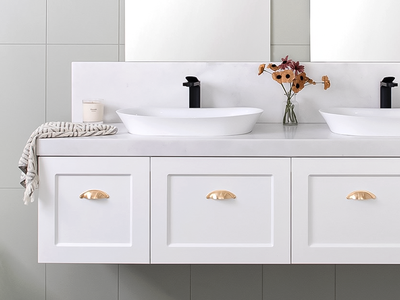
Wardrobe handles often have different practical requirements from regular door handles. Depending on the door style, you may need a pull handle, D handle, recessed lip pull or flush pull.
Think about how the wardrobe hardware works with the bedroom door handle and nearby cabinetry. You do not need an exact match, but the finishes should feel like they belong in the same room.
Step 6: Decide How Much You’ll Spend
Door-handle budgets can add up quickly once you are buying for every room, so it helps to price the whole door, not just the handle you first notice online. Smaller items such as flush pulls and simple pulls are generally around $25–$55, while entry-level internal handle or lock sets start from roughly $50.
For a more considered internal handle set in a broader range of finishes, allow around $100–$180 per door. Premium, architectural or feature-door hardware can move beyond $200 per door, particularly when you are choosing a more detailed finish or a matching range across the home.
Entry doors should be budgeted separately.
A front-door setup may include an entrance handle or pull, a lock or cylinder, and potentially a deadbolt or smart lock. Smart-entry options can take the cost into the several-hundred-dollar range, so check exactly what is included before comparing products.
We see customers get the best value when they spend more on the hardware they use and notice every day: the front door, main bedroom, bathrooms and busy living areas. For cupboards, utility rooms and less-visible doors, a simpler option may make more sense as long as the finish still works with the rest of the home.
When you’re budgeting, count every door first and include the extras. You may also need latches, privacy locks, deadbolts, hinges, door stops, cabinet or wardrobe handles, and installation. A handle that looks less expensive on the product page can cost more overall if the lock, latch or matching hardware needs to be bought separately.
How to Maintain Your Door Hardware
Good door hardware should last for years with simple, regular care. We recommend keeping cleaning gentle and dealing with a loose handle before it has time to cause wear around the fixing points.
General care
Wipe handles periodically with a soft, damp cloth to remove dust, fingerprints and everyday marks. Avoid abrasive cleaners, scourers and acidic products, especially on brass, nickel and coated finishes. These can damage the surface or change the sheen over time.
Brushed finishes
For brushed finishes such as brushed nickel, satin brass and gunmetal, wipe in the direction of the brushing. A soft microfibre cloth is usually all you need. We see scratches most often when people use an abrasive pad or cleaner that is too harsh for the finish.
Brass and antique brass
Brass finishes can change over time, particularly if they are unlacquered or designed to develop a patina. That is part of the appeal for many customers. If you are cleaning brass, check the product specification first: lacquered brass should generally only be wiped down, while unlacquered brass may need a brass-specific product if you want to restore its shine.
For more advice, read how to clean brass door handles.
Handles and locks that feel stiff
If a handle or lock becomes stiff, use a lubricant that is suitable for the mechanism and follow the manufacturer’s care advice. Avoid coating the mechanism with an unsuitable oil-based product, as this can attract dust and create more issues over time.
Loose screws
Door handles can loosen with regular use. A quick check and gentle tighten of the fixing screws every now and then can prevent wobbling and unnecessary wear. If the door is misaligned or the latch is not catching properly, it is worth getting the cause checked rather than forcing the handle to compensate.
Your Home’s Finishing Touch Starts With the Right Hardware
Door handles are a small detail that make a home feel complete. Our advice is simple: start with the function of each door, choose a shape that works, check the fit, then bring the finishes and surrounding hardware together. You don’t have to make every piece match. You just need a clear plan.
If you are not sure where to start, browse Buildmat’s full door-handle range or door hardware collection. Melbourne customers can also visit the Buildmat Selection Centre at 45 Warrigal Rd, Hughesdale with door measurements, plans or finish samples. We can help you compare the options before you commit to a full order.
Frequently Asked Questions
They do not need to be identical, but they should feel consistent. We usually recommend choosing one handle shape and colour for internal doors, then using the right function for each room, passage for everyday rooms, privacy for bathrooms and bedrooms, and dummy hardware where a latch is not needed. The front door can be more substantial or more of a feature, provided it still relates to the rest of the home.
Replacing handles can be a straightforward DIY job when the new hardware suits the existing door preparation. Before you start, check the backset, hole positions, door thickness and whether the new rose or backplate will cover the old holes. If you are drilling a new door, changing lock hardware, dealing with a fire-rated door or unsure about the fit, it is better to speak with a qualified tradesperson.
Read our guide to how to replace door handles.
A passage set has a latch but no lock, so it suits hallways, laundries and living areas. A privacy set has a locking function for rooms such as bathrooms, toilets and bedrooms.
You can read more in our guide to passage, privacy and dummy door handles.
The best finish depends on the product and where it will be used. Brushed and coated finishes can be practical for busy homes because they generally make fingerprints and light marks less obvious than polished surfaces. Our recommendation is to check the product specification, follow the care advice and choose a finish that works with the level of use in that room.
Lever handles are generally easier to operate than knobs for people with limited grip strength or dexterity. Look for a lever that is comfortable to hold and does not have a very thin or sharp profile. If accessibility is a major requirement, discuss the wider door and hardware plan with the relevant professional before ordering.