Undermount vs Topmount vs Flush Mount Sinks - Which Should You Choose?
Not sure whether an undermount sink or top mount sink suits your kitchen? This guide explains how each sink type works, what to consider for your benchtop, and how to balance functionality, budget, and design.

The difference between an undermount sink, top mount sink and flush mount sink comes down to how the sink sits in relation to your benchtop.
- A top mount, sometimes called an inset, drop-in or overmount sink, has a visible rim that rests on top of the benchtop.
- An undermount sink is installed underneath the benchtop, so the benchtop edge remains visible above the sink bowl.
- A flush mount sink is installed so the rim sits level with the benchtop, creating an almost seamless transition between the two surfaces.
All three can work well in Australian kitchens. The right choice depends on your benchtop material, budget, how you use your sink day-to-day and the overall look you want to achieve.
Top Mount vs Undermount vs Flush Mount Sink: Quick Comparison
| Feature | Top Mount / Inset Sink | Undermount Sink | Flush Mount Sink |
|---|---|---|---|
| Installation | Simplest to install | Professional installation recommended | Requires very precise professional installation |
| Cost | Generally most affordable | Higher installation cost | Generally higher installation cost |
| Benchtop compatibility | Works with most materials, including laminate | Best suited to stone and solid surfaces | Best suited to compatible stone and solid surfaces |
| Cleaning | Raised rim can catch crumbs | Easy to wipe crumbs directly into sink | Easy to wipe crumbs directly into sink |
| Look | Classic and practical | Clean and modern | Streamlined and seamless |
| Benchtop edge | Covered by sink rim | Exposed around sink cut-out | Sink rim sits level with benchtop |
| Best for | Easy installations and renovations | Modern kitchens and stone benchtops | Seamless, high-end kitchen designs |
TLDR: Which Sink Should You Choose?
If you’re torn between a top mount sink, undermount sink and flush mount sink, here’s the quick breakdown.
- Choose a top mount or inset sink if you want something practical, cost-effective and straightforward to install. It’s a great match for laminate or timber benchtops and can also make replacing an existing sink easier.
- Choose an undermount sink if you want a clean, modern look that shows off your benchtop. It’s ideal for stone or solid-surface benchtops and makes wiping crumbs and water straight into the sink easy.
- Choose a flush mount sink if you want the sink rim to sit level with your benchtop for an especially streamlined finish. It requires more precise fabrication and installation, so you'll need to plan it with your benchtop supplier or stonemason.
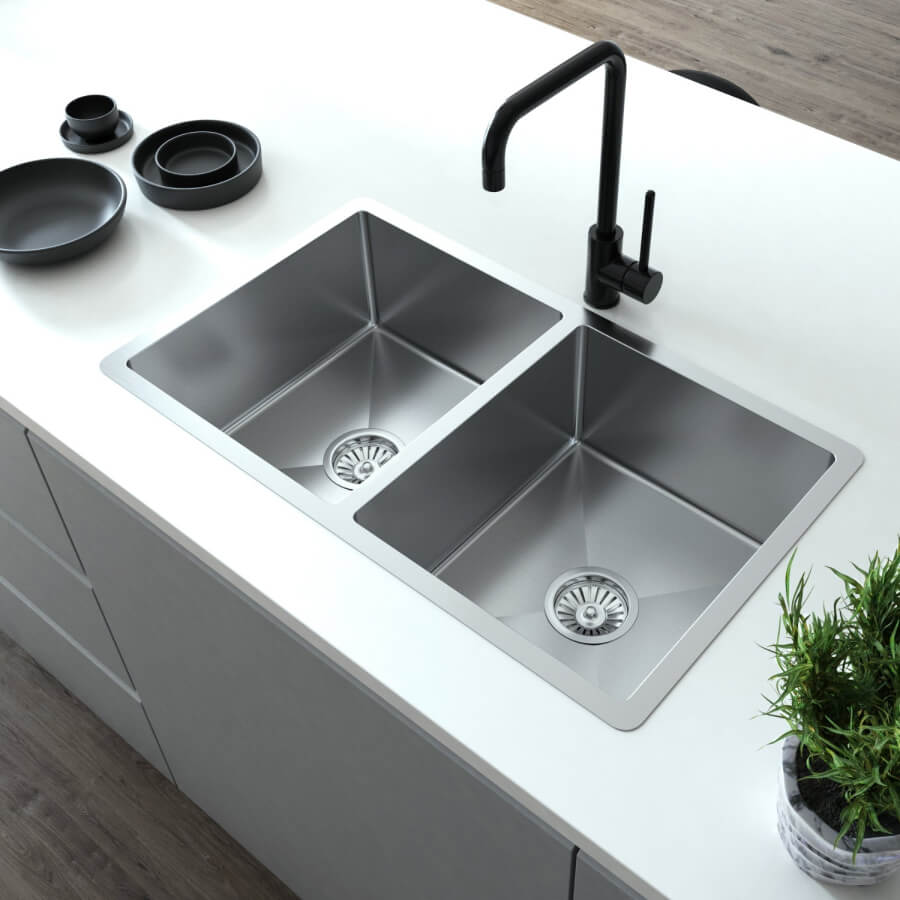
What is a Top Mount Sink?
A top mount sink rests on top of the benchtop with its rim visible. It’s sealed with silicone or caulk and supported by the countertop itself, which makes it simple to install and replace later. Top mount sinks are the go-to for easy, budget-friendly renovations or DIY projects. You’ll find a full range of styles in Buildmat’s topmount kitchen sinks collection, including handmade stainless steel designs.Why People Choose Top Mount Sinks
- Easy to install. You can usually install a top mount sink yourself with a jigsaw and sealant. There’s no need for professional cutting or stonework.
- Affordable. Because they’re simple to fit, they’re a cost-effective option for most kitchen renovations.
- Protects benchtop edges. The rim of the sink guards the stone or solid surface beneath from knocks and chips over time.
- Easy to clean and maintain. You can see and reach every edge, making it easier to wipe away grime or gunk before it builds up.
- Simple to replace later. If you ever want to swap your sink for a different shape or size, a top mount design is easier to remove and replace.
What to Watch Out For
Pressed stainless steel sinks are often cheaper but thinner and louder than handmade stainless steel models. If you want something that lasts, look for premium designs in Buildmat’s stainless steel kitchen sinks collection. These are thicker, quieter, and built for heavy daily use.
Shop Topmount Sinks
Handmade stainless steel topmount kitchen sinks.
What is an Undermount Sink?
An undermount sink is installed underneath the benchtop. The sink lip sits below the counter, creating a seamless transition from benchtop to bowl. This clean finish is popular in modern kitchen designs where you want the focus on the benchtop. Buildmat’s undermount kitchen sinks range includes handcrafted stainless steel sinks that combine strength, functionality, and design-led style.Why People Choose Undermount Sinks
- Seamless look. The benchtop flows straight into the sink, creating a sleek, modern feel that suits stone or solid surfaces.
- More counter space. Without the rim on top, you gain a few extra centimetres of usable benchtop area.
- Easy to wipe down. You can sweep crumbs and water straight into the sink without catching on the rim.
- Premium finish. Undermounts are usually found in high-end kitchens and can increase your home’s resale value.
What to Watch Out For
Undermount sinks take more planning and are best installed by professionals. Your cabinet maker both need the exact measurements before cutting the benchtop. The sink also needs a strong base to support its weight underneath. If your benchtop is laminate or timber, an undermount isn’t recommended. These materials can swell or warp when exposed to water. For these surfaces, a top mount sink will perform better over time.
Shop Undermount Sinks
First-class stainless steel undermount kitchen sinks.
What is a Flushmount Sink?
A flushmount sink is installed so the top edge of the sink sits level with the surrounding benchtop. Unlike a top mount sink, the rim doesn't sit above the counter; unlike an undermount sink, the sink isn't completely concealed beneath it.
The result is a very streamlined transition between your benchtop and sink. Crumbs and water can be wiped straight across the bench and into the bowl without a raised rim getting in the way.
Flush mounting can be a great choice if you love the seamless appearance of an undermount sink but prefer the sink edge to sit level with the benchtop.
Why People Choose Flush Mount Sinks
- Seamless appearance. The sink and benchtop sit at approximately the same level for a streamlined finish.
- Easy to wipe down. With no raised rim, crumbs and water can be wiped straight into the bowl.
- Shows off both materials. You still see the sink edge, but it doesn't visually interrupt the benchtop in the same way as a traditional top mount installation.
- Premium finish. When properly fabricated and installed, a flush mount sink can create a highly considered, architectural look.
What to Watch Out For
Flush mounting requires very precise fabrication and installation. The benchtop needs to be cut so the sink edge sits accurately level with the surrounding surface, which leaves less room for error than a standard top mount installation.
Not every sink or benchtop is suitable for flush mounting, either. If you're considering this installation style, speak to your benchtop supplier, stonemason or installer before your benchtop is cut and check that your chosen sink supports flush mount installation.

Flushmount Kitchen Sinks
What is a flushmount sink? A flushmount sink is designed to sit level with the benchtop, g..
Which Sink is Easier to Install and Maintain?
Top mount sinks are generally the easiest to install, most affordable and most forgiving if the benchtop cut-out isn't perfect. They're a practical option for straightforward kitchen renovations and can work with a wider range of benchtop materials.
Undermount sinks require greater precision because the cut-out remains visible around the bowl. The sink also needs to be securely supported beneath the benchtop, and the seal between the sink and benchtop needs to remain watertight.
Flush mount sinks require the most precise fabrication of the three. The sink needs to sit level with the benchtop, so the cut-out and rebate need to suit the exact sink and installation requirements.
Whichever installation style you choose, keep an eye on the silicone and seals around your sink over time. Maintaining a watertight seal helps prevent moisture and grime from getting where they shouldn't/
Choosing the Right Kitchen Sink for Your Benchtop
Your benchtop material plays a big role in which sink installation will work best.
- Laminate benchtops: A top mount or inset sink is generally the most straightforward option because the sink rim covers the cut edge.
- Timber benchtops: Check the requirements of your particular benchtop, but careful sealing around the sink is essential to protect the timber from moisture.
- Stone and solid surfaces: Undermount and flush mount installations can create a clean, seamless finish and allow the benchtop to become more of a feature.
If you're building new cabinetry, choose your sink before your benchtop is fabricated. Your cabinetmaker and benchtop supplier will need the exact sink specifications, cut-out requirements and intended installation method.
Top Mount vs Undermount vs Flush Mount: Which Looks Best?
This really comes down to the style you're trying to achieve.
- A top mount sink has a visible rim and can suit everything from traditional kitchens to contemporary renovations. It's also a practical choice when ease of installation matters more than creating a completely seamless benchtop.
- An undermount sink creates a clean, minimalist look because the sink rim is hidden below the benchtop. It's particularly popular with stone benchtops where you want the surface itself to take centre stage.
- A flush mount sink sits somewhere between the two visually. You can still see the edge of the sink, but because it sits level with the benchtop, the transition is much more streamlined than a traditional top mount installation.
There's no universally “best” option. The right choice is the one that works with your benchtop, budget and kitchen design.
Style and Finishes That Match Your Kitchen
Once you’ve chosen your sink type, think about how it fits with your tapware and accessories. For a consistent look, match the finish of your sink to your tap and hardware.You can browse Buildmat’s full range of kitchen mixers and kitchen accessories to finish your design and keep everything coordinated.
Frequently Asked Questions
Is an inset sink the same as a top mount sink?
Generally, yes. Inset, top mount, overmount and drop-in are commonly used to describe sinks installed into the benchtop from above, with the sink rim resting on top of the surface. Terminology can vary between manufacturers, so always check the installation instructions for the individual sink.
What is the difference between a flush mount and undermount sink?
A flush mount sink has an edge that sits level with the benchtop, while an undermount sink is installed completely underneath it. Both avoid the raised rim of a traditional top mount sink, but they create slightly different finishes.
Can any sink be flush mounted?
No. Whether a sink can be flush mounted depends on the design of the sink and the installation requirements. Check the product specifications and confirm the installation method with your benchtop fabricator before your benchtop is cut.
Are flush mount sinks more expensive to install?
They can be. Flush mounting requires precise benchtop fabrication so the sink sits level with the surrounding surface. This can make installation more involved than a standard top mount sink.
Are undermount sinks harder to clean?
The bowl itself is easy to clean because you can wipe crumbs and water directly from the benchtop into the sink. You just need to keep an eye on the seam where the benchtop meets the sink and maintain the seal when required.
Can I install an undermount sink on a laminate benchtop?
A top mount sink is generally the safer and more straightforward option for laminate because its rim covers the exposed cut edge. If you're considering an undermount installation, check whether your particular benchtop material and manufacturer support it.
Which sink style looks more modern?
Both undermount and flush mount sinks are popular in contemporary kitchens. Undermount sinks hide the sink rim completely below the benchtop, while flush mount sinks keep the rim visible but level with the surrounding surface.
Do undermount sinks cost more?
Installation is generally more involved than a top mount sink because the benchtop cut-out needs to be finished precisely and the sink needs appropriate support underneath.
Related Posts